WeWork: when nobody in the room could say no
WeWork's board had the data. Investors had the models. Employees had the doubts. The decision process ensured none of it mattered.
Outcome: From $47B valuation to pulled IPO, CEO ousted, $8B+ SoftBank write-down.
In January 2019, WeWork was valued at $47 billion. Nine months later, the IPO was pulled and the CEO was forced out.
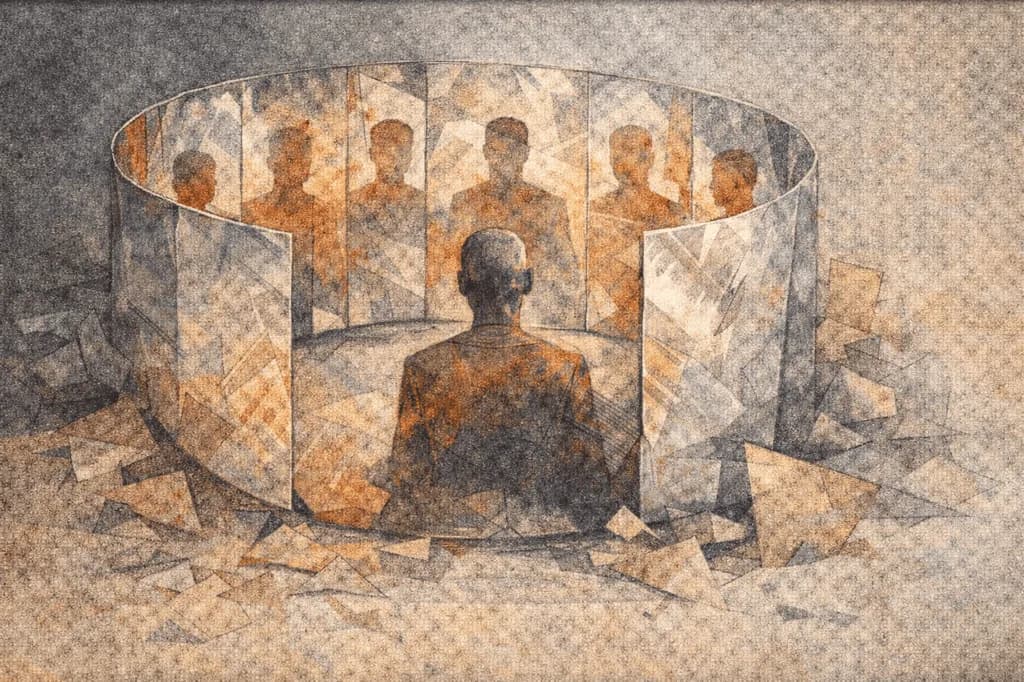
The WeWork story is often told as a founder story — the tale of Adam Neumann's charisma, excess, and eventual downfall. But the individual narrative obscures the structural one. WeWork's decision-making failures were not caused by one person. They were produced by a governance architecture that concentrated power, eliminated checks, and made dissent structurally impossible. The company's board included experienced investors and executives. SoftBank deployed sophisticated financial models. WeWork's own employees privately questioned the company's unit economics and growth sustainability. The information needed to avoid catastrophe existed at every level of the organization. What did not exist was a decision process through which that information could influence outcomes. Understanding why requires examining three specific structural failures.
Decision timeline
2010
Adam Neumann and Miguel McKelvey found WeWork as a coworking space company.
Process failure: Dual-class share structure established early, giving Neumann outsized voting control that would later prevent governance intervention.
2017
SoftBank invests $4.4 billion through its Vision Fund. WeWork valued at $20 billion.
Process failure: The scale of SoftBank's investment created a validation loop — the investment itself became evidence of value, making it harder for anyone to question fundamentals.
January 2019
SoftBank leads additional investment valuing WeWork at $47 billion.
Process failure: Each funding round anchored higher. No decision forum existed where the valuation methodology itself could be challenged independent of the people who set it.
August 2019
WeWork files S-1 prospectus. Public markets react negatively to financial disclosures.
Process failure: The S-1 revealed information that insiders already knew — governance issues, related-party transactions, unsustainable losses. The public process surfaced what the private decision process could not.
September 2019
IPO postponed indefinitely. Board pushes Neumann out as CEO.
Process failure: The board that removed Neumann had the same information months earlier but lacked the structural mechanism to act until external market pressure forced the issue.
October 2019
SoftBank takes control with rescue package. WeWork valued at $8 billion — an 83% decline from January.
Process failure: Final outcome of a decision architecture that concentrated power without proportional accountability.
The founder filter: when charisma replaces process
Adam Neumann was, by all accounts, extraordinarily persuasive. Board members, investors, and employees described his ability to reframe challenges as opportunities and make skeptics feel they were missing the vision. This is not unusual among successful founders. What was unusual was the absence of any structural counterweight. WeWork's dual-class share structure gave Neumann 20 votes per share — effectively making him impossible to overrule. Board seats were filled with allies. Decision-making forums were environments where Neumann set the agenda, framed the options, and controlled the narrative. Research on charismatic leadership by Wharton professor Adam Grant shows that the more persuasive a leader, the more critical institutional checks become — because persuasion makes it harder for individuals to trust their own judgment when it conflicts with the leader's framing.
The investor echo chamber: when funding validates itself
SoftBank's Vision Fund invested in WeWork at valuations that each round's participants treated as market-validated. But the validation was circular. SoftBank set the price. SoftBank's investment at that price was then cited as evidence that the price was correct. Other investors followed because SoftBank's participation was treated as diligence. This created what behavioral economists call an "information cascade" — where each participant's decision appears rational because it follows the previous participant's decision, but the entire chain rests on a single original assessment that was never independently validated. NYU professor Aswath Damodaran publicly questioned WeWork's valuation methodology in 2019, demonstrating that applying standard metrics produced a value fraction of the private market price. The information was available. The decision process had no mechanism to incorporate it.
The governance void: when oversight structures have no teeth
Corporate governance exists to ensure that decisions reflect stakeholder interests, not just the preferences of whoever holds the most power. WeWork's governance structure systematically disabled each safeguard. The dual-class share structure meant shareholder votes could not overrule the founder. The board composition included members with personal financial ties to Neumann. The compensation committee approved related-party transactions — including a $5.9 million payment to a Neumann-controlled entity for the "We" trademark — without independent review. None of these individual failures was hidden. Governance experts flagged concerns publicly before the S-1 was filed. The decision process failure was not that problems were invisible but that no mechanism existed to convert identified problems into governance action. The structure was designed to concentrate decision-making power, and it performed exactly as designed.
Named Pattern
The Candor Gap
The measurable difference between what people think and what they say in group settings — a gap that grows approximately 40% per management level above the speaker. At WeWork, The Candor Gap operated at extreme scale: board members, executives, and investors privately harbored doubts about valuation, governance, and unit economics that they did not express in decision forums where Neumann was present. The gap was not caused by individual cowardice but by a power structure that made candor irrational — disagreeing with a founder who controlled 20x voting rights and set the board agenda carried career risk with no realistic upside.
Power concentration and board capture in venture-backed companies
Research by Stanford professor Jesse Fried on dual-class share structures found that companies with unequal voting rights underperform their peers by an average of 4.5% annually in the five years following IPO. The mechanism is straightforward: concentrated voting power reduces the decision-making influence of shareholders with the strongest incentive to demand accountability. A 2019 study in the Journal of Financial Economics examined 139 venture-backed companies and found that founder-friendly governance provisions — supermajority voting, controlled board composition, and limited shareholder rights — correlated with a 23% higher probability of value-destroying decisions. The study noted that the correlation was strongest precisely when the founder was most charismatic, because charisma amplified the structural power imbalance by making informal dissent feel futile even before formal mechanisms were considered.
WeWork's peak private valuation in January 2019
Source: SoftBank investment filings
decline in valuation within nine months — from $47B to $8B
Neumann's voting power ratio through dual-class share structure
Source: WeWork S-1 filing
annual underperformance of dual-class companies vs. peers
Source: Stanford, Jesse Fried
What WeWork teaches about decision governance
WeWork's collapse offers three lessons about decision process design. First, charismatic leadership and institutional accountability are not substitutes — they are complements. The more persuasive a leader, the more important it is that decision processes include structural checks that operate independently of that leader's influence. Second, funding is not validation. Each investment round should include an independent assessment of fundamentals that is structurally separated from the enthusiasm of the investors participating in that round. Third, governance mechanisms must have teeth. A board that cannot act without the founder's approval is not governance — it is theater. WeWork's board had the titles and the fiduciary obligations, but the decision architecture ensured that those obligations could never translate into action until external market forces made inaction impossible.
How private input collection breaks through power concentration
WeWork's failure was fundamentally about a decision process where one voice dominated all others. Board members, executives, and investors had private doubts they could not express in forums controlled by the person those doubts concerned. Async decision-making addresses this specific failure mode. When input is collected through private, individual channels rather than group meetings chaired by the most powerful person in the room, two dynamics change. First, contributors assess questions on their merits rather than performing for an audience that includes the founder. Second, synthesis reveals the actual distribution of opinion — making it visible when a supermajority privately disagrees with the direction set by the most powerful voice. This does not solve structural governance problems like dual-class shares. But for the many decisions where the information exists but the decision forum suppresses it, private input collection surfaces what group dynamics hide.
Frequently asked questions
Wasn't WeWork just a case of fraud rather than a process failure?
WeWork was not Theranos. Neumann was not charged with fraud. The company provided a real service that real tenants used. The failure was not deception but governance — a decision process that allowed a charismatic founder to pursue growth at any cost without meaningful institutional checks. The S-1 disclosed the governance issues, the related-party transactions, and the financial losses. The information was not hidden. It was available to every board member and major investor for years. The problem was that the decision process could not convert available information into corrective action. That is a structural failure, not a criminal one. Understanding the difference matters because process failures are preventable through better design. Fraud requires a different set of safeguards entirely.
Isn't this really about one person, not about process?
This is the most natural reading, and it is partially correct — Neumann's personality and decisions were central to the outcome. But attributing everything to one individual is itself a decision process failure: it assumes that removing the individual fixes the problem. WeWork's governance structure would have created similar dynamics with any sufficiently charismatic founder. Dual-class shares, a controlled board, and validation-loop funding are structural features that amplify founder power regardless of who the founder is. Uber under Travis Kalanick exhibited remarkably similar dynamics despite a completely different founder personality. The pattern is structural, not personal. Fixing it requires changing the decision architecture, not just changing the person at the top.
Could better governance really have prevented WeWork's decline?
Better governance would not have guaranteed success — the coworking business model faces genuine challenges. But governance could have prevented the specific catastrophe that occurred. A board with independent authority could have imposed financial discipline before losses became existential. An investment process with independent valuation review could have prevented the $47 billion fantasy that made the eventual correction so devastating. And a decision process that collected private input from executives and board members could have surfaced the concerns that nearly everyone held privately but no one expressed in Neumann-controlled forums. The question is not whether WeWork would have thrived with better governance. It is whether a $39 billion value destruction in nine months was inevitable or the product of a decision architecture that could have been designed differently.
“WeWork's board didn't fail to govern. It was structured so that governance was impossible.”
Related reading
Decision Autopsy
How Nokia Lost the Smartphone War It Was Winning
How Nokia's decision-making process failed despite having the talent, market share, and early smartphone prototypes to dominate the mobile era.
Decision Autopsy
Boeing 737 MAX: When Production Pressure Silenced Safety
How Boeing's decision process allowed production speed to override engineer safety concerns, leading to two fatal crashes and 346 deaths.
Decision Autopsy
How Google Bet Everything on a Social Network Nobody Asked For
How Google's decision process turned competitive anxiety into a company-wide mandate, tied bonuses to social metrics, and silenced internal dissent.
Use Case
Restructuring & Integration
Collect honest input during restructuring or mergers through private AI conversations. Surface concerns and alignment before the all-hands.
Use Case
Leadership Feedback
Collect candid feedback for senior leaders through private AI conversations. Surface what the inner circle actually thinks — not what they say in meetings.
Ready to make better decisions?
Start your first AI-moderated session in under a minute. No meetings required.
Get Started Free