Discover whether your leadership team actually agrees
Collect honest strategic perspectives from every leader through private AI conversations, then see where genuine alignment exists — and where the real debate needs to happen.
Six leaders. Six confident positions. And the nagging sense that half of this debate is theater.
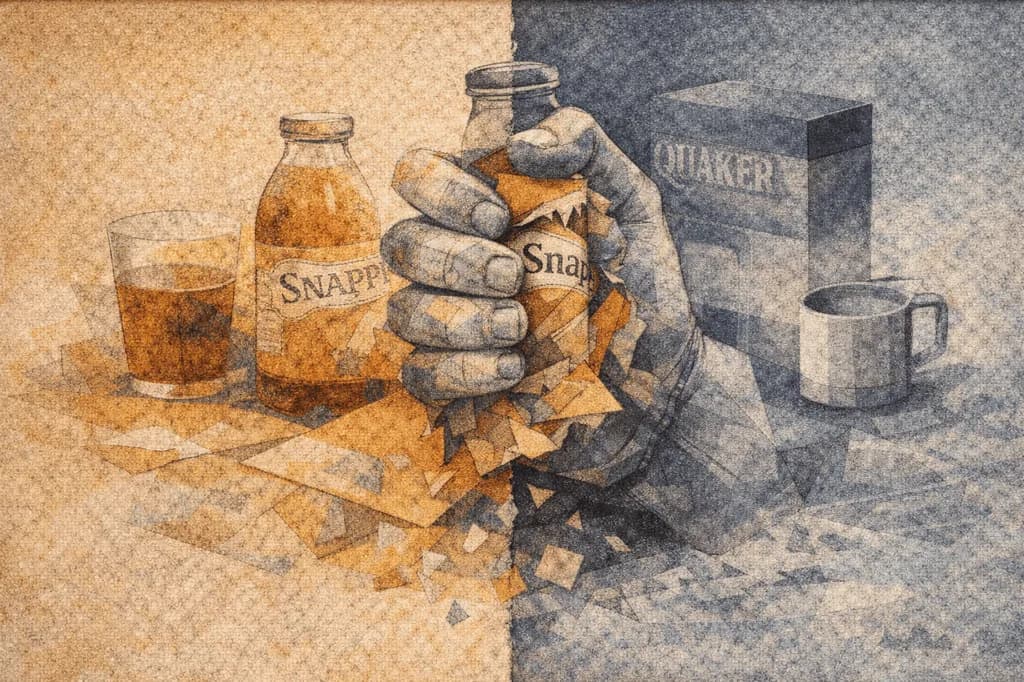
Strategy offsite, day two. The CEO pitches expansion. The CFO argues for consolidation. The CTO pushes a platform play. Four hours in, it looks like three competing visions. In reality, three of them share the same worry about execution capacity. None of them has said it — because the meeting rewards positions, not doubts.
The strategy meeting where everyone performs
The leadership team meets to decide direction. Should we expand into the new market? Double down on the core product? Pivot the positioning? Each leader arrives with a position — not necessarily the one they believe in most, but the one they can defend. The Confidence Performance begins: showing doubt in a strategy meeting feels like showing weakness. A Stanford study found that 64% of executives admit to advocating for positions they privately have significant reservations about, because the meeting format rewards conviction over candor. The result is a debate between positions no one fully holds. The genuine shared concerns — "we don't have the data to decide this" or "we all know the real risk is execution, not strategy" — never surface. Decisions get postponed. Or worse, they get made based on who argued most forcefully rather than what the group actually believes. Three months later, the same decision comes back to the table.
Named Pattern
The Confidence Performance
The dynamic in strategy discussions where leaders project certainty about their position to appear strong, while privately harboring significant doubts — creating a room full of false conviction that prevents genuine exploration of shared uncertainty.
What changes when leaders share before they perform
Before the strategy session, each leader has a private AI conversation about the decision at hand. The AI asks questions that meeting dynamics suppress: "What do you genuinely believe is the right direction, independent of what others might think?" and "Where are you least confident in your own position?" and "What information would change your mind?" Without the pressure to perform certainty, leaders share what they actually think — including their doubts. The synthesis reveals the most valuable thing a leadership team can know: where do we actually agree, and what are we genuinely uncertain about? Most teams discover that 50-60% of their "disagreement" was performative — different people defending different positions while sharing the same underlying concerns. The strategy meeting that follows is dramatically different: 15-20 minutes focused on the 2-3 genuine tensions, with full context on why each perspective exists.
How it works
Frame the strategic question
Describe the strategic decision in one sentence. AI drafts a neutral question, and optional sharpening asks what is new since the last round and which alternatives are genuinely on the table, before it reaches leaders.
Leaders share perspectives privately
Each leader has a private AI conversation about their genuine assessment, concerns, and what would change their mind.
Review alignment and tensions
See where leaders actually agree, where genuine disagreement exists, and hold a focused strategy session on the real questions.
of executives advocate for positions they privately have significant reservations about
Source: Stanford GSB
of apparent strategic disagreement is performative, masking shared underlying concerns
Source: TableAI user data
average number of times a major strategic decision is deferred before being made
Source: TableAI user data
of employees can correctly identify their company's strategy
Source: Harvard Business Review
Key benefits
End The Confidence Performance
Private conversations let leaders share genuine assessments without the pressure to appear certain.
Discover hidden alignment
50-60% of apparent disagreement in strategy sessions is performative — same concerns, different packaging.
Stop postponing decisions
When you can see that the team actually agrees on direction, decisions stop being deferred.
Better use of meeting time
Strategy sessions shift from 2-hour debates to 20-minute focused discussions on genuine tensions.
Take this to your next meeting
Three questions you can use right away — no tools required.
Before the meeting, ask each leader to privately write down: "What am I least confident about in my own position?" Share the answers anonymously at the start. Watch how fast the "debate" changes when everyone admits what they don't know.
Ask: "If we could only do one thing in the next 90 days, what would it be?" Force a single priority. When leaders independently pick the same thing, the "disagreement" was packaging, not substance.
At the end of the strategy discussion, ask by text (not hand-raise): "On a scale of 1-10, how confident are you that we've actually resolved this?" If the average is below 7, you haven't decided — you've just run out of time.
Frequently asked questions
What if the leadership team is tiny — just 3-4 people?
Small teams can benefit significantly, but the dynamic is different. With 3-4 people, the synthesis provides less anonymity — perspectives are harder to aggregate without attribution. However, the core value still applies: each person shares their genuine assessment privately, without anchoring to what others say first. For very small teams, we recommend framing it as "structured preparation" rather than "anonymous input." The synthesis becomes a shared starting point: "Here's where we align and here's where we differ" — allowing the face-to-face conversation to skip discovery and go straight to resolution. Many 3-4 person leadership teams find that the 20 minutes of private input saves 2 hours of circular debate.
How do you handle a situation where one leader's view should carry more weight?
In most organizations, not all perspectives are equal on every decision — the CTO's view on technical architecture matters more than the CMO's, and vice versa for brand positioning. The synthesis doesn't claim to be a democracy. It reveals the landscape of perspectives so the final decision-maker (CEO, board, etc.) can see the full picture. The synthesis shows patterns across the group and highlights where domain-specific concerns emerge. A CEO reading the synthesis can weigh inputs appropriately while still benefiting from the comprehensive view. The goal isn't to average opinions — it's to ensure that the decision-maker has access to honest input from everyone, which they can then weigh based on expertise and authority.
Can we use this for board strategy sessions?
Absolutely — board strategy alignment is one of the highest-value applications. Board members are time-constrained, geographically distributed, and typically meet only quarterly. Traditional board dinners and pre-meetings rarely surface genuine strategic tension. Each board member spends 5-8 minutes in a private AI conversation sharing their strategic perspective, concerns, and priorities. The synthesis gives the chair a clear map of board alignment before the meeting. Companies using this approach report that board sessions become substantially more productive because directors arrive already knowing where consensus exists and where genuine debate is needed. One chair described it as "getting four hours of board dinner insights in a 2-page synthesis."
What if one leader's view should carry more weight — isn't treating all input equally misleading?
The synthesis doesn't treat input equally — it maps it. When the CTO raises a technical risk that no one else mentions, it appears as a unique perspective, not as one vote among many. The synthesis shows where concerns cluster and where they're isolated, so the decision-maker can see both the group pattern and the individual signal. A CEO reading the synthesis can still weigh the CFO's financial concern more heavily — but now they're making that judgment with the full landscape visible, not just the loudest voice in the room. The tool doesn't democratize the decision. It democratizes the input.
Our leadership team is only 4 people — isn't this overkill?
Small teams are actually the most common use case for strategic alignment. With 4 leaders, a strategy meeting feels manageable — but the Confidence Performance is strongest in small groups, because the social pressure to appear decisive is highest when everyone knows everyone. Each leader spends 5-8 minutes sharing their genuine assessment privately. The synthesis reveals whether your "disagreement" is real and about what specifically, or whether you've been debating packaging while sharing the same underlying concern. For a 4-person leadership team, the synthesis often saves an entire offsite day by showing that the group's 2-hour debate was actually about one specific tension — not four competing visions.
How do we make sure we're asking the right strategic question in the first place?
Strategy questions are especially vulnerable to what we call The Wrong Question Problem — "Should we pivot to enterprise?" is really "I think we should pivot to enterprise, does anyone object?" TableAI works on this before any stakeholder sees the question. The AI drafts the question and its background without your preferred answer or any steering language. An optional sharpening step then asks what specifically triggered this discussion, which alternatives are genuinely viable, who would be affected, and what constraints any option must respect. Naming the real alternatives is usually where a disguised solution gives itself away. It takes about two minutes and often shows the original question needed a reframe — which changes every answer that follows.
“Most strategy debates aren't debates at all. They're six people performing certainty while privately doubting the same things.”
Related reading
Decision Autopsy
Kodak Invented the Digital Camera — Then Decided to Ignore It
How Kodak's decision process failed to act on its own digital camera invention, despite decades of internal evidence that film was declining.
Decision Autopsy
Blockbuster Had the Data, the Deal, and the Customers — Then Decided Wrong
How Blockbuster's decision process made it rational to reject Netflix, ignore streaming, and protect late fees — until the rational choice killed it.
Decision Autopsy
How Google Bet Everything on a Social Network Nobody Asked For
How Google's decision process turned competitive anxiety into a company-wide mandate, tied bonuses to social metrics, and silenced internal dissent.
Use Case
Go/No-Go Decisions
Collect honest input on whether to continue or kill a project through private AI conversations. Surface the consensus no one dares to voice in meetings.
Use Case
Leadership Feedback
Collect candid feedback for senior leaders through private AI conversations. Surface what the inner circle actually thinks — not what they say in meetings.
Comparison
TableAI vs. Meetings
Compare AI-moderated async decisions with traditional meetings. See how TableAI eliminates scheduling friction, anchoring bias, and wasted time.
Comparison
TableAI vs. Slack Polls
Compare TableAI with Slack polls. Polls capture preferences; AI interviews capture reasoning, trade-offs, and the nuance votes miss.

Find out if your leadership team actually disagrees
Collect honest strategic perspectives privately. Discover whether you're debating real tensions or performing certainty — before the next offsite.
Start a strategy alignment session